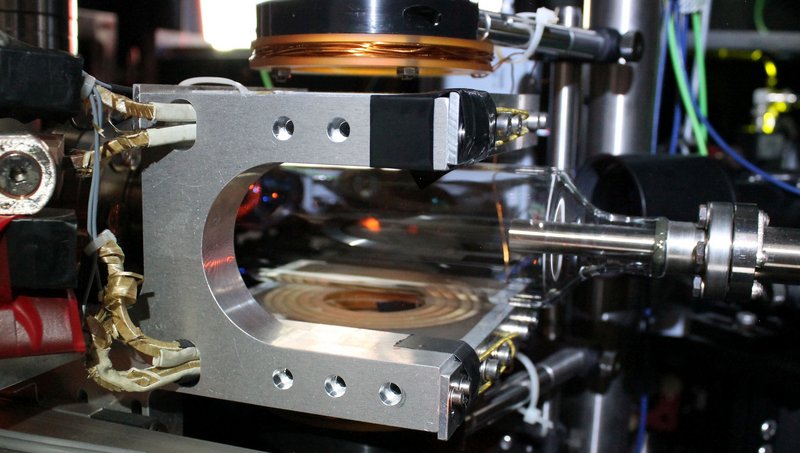
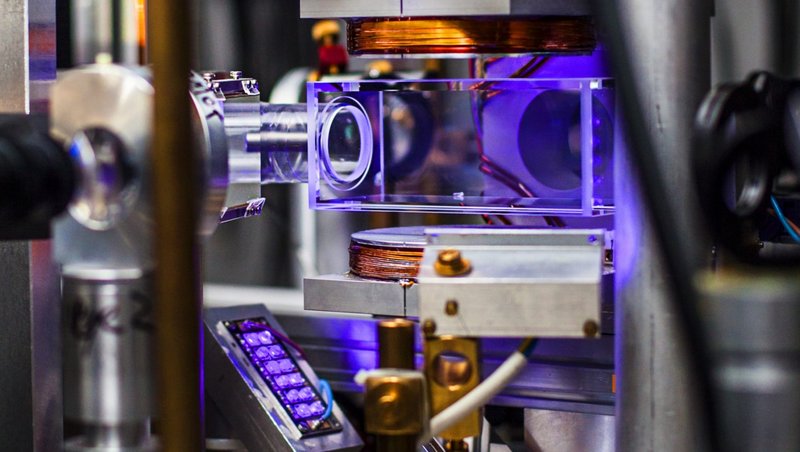
Welcome to the ultracold quantum gas research group at Aarhus University!
In our research we investigate the properties of atomic gases at extremely low temperatures. This allows us to gain fundamental knowledge of quantum mechanical behaviour in few- and many-particle systems. Click the links below to learn more about our research!
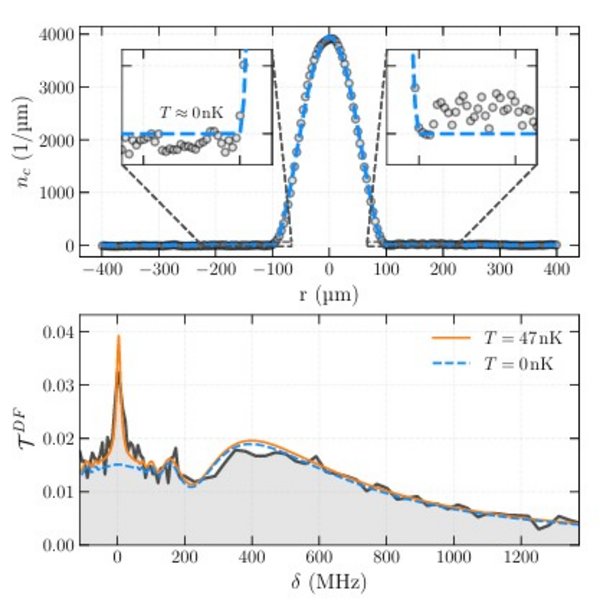
Our work on optical spectroscopy of Bose-Einstein condensates at finite temperature is available on arXiv.
We done spectroscopic measurements on partially condensed 87Rb gases, and observed distinct spectral features due to the thermal and the Bose condensed components!
To interpret the observed spectra, we develop a model for light propagation through an inhomogeneous atomic cloud. This enables us to extract temperature and atom number, which we benchmark against conventional time-of-flight absorption imaging. Our results reveal previously unexplored spectral structure in optically dense ultracold gases and establish spectroscopy as a tool for characterizing ultracold systems at very low temperatures.
Our paper is on Arxiv here
(06/2026)
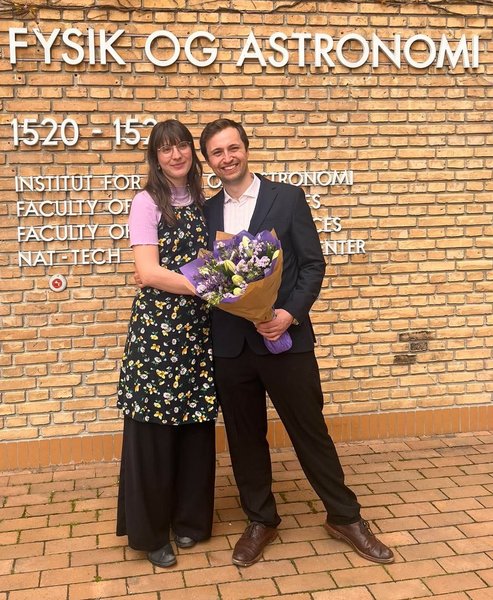
On the 6. Mai Laurits Nikolaj Stokholm successfully defended his PhD titled “Real-Time Quantum Sensing in Rubidium”.
The assessment committee consisted of Prof. Klaus Sengstock from Hamburg University and Robert Löw from the University of Stuttgart.
Congratulations from us all!
Laurits' final work is already available online:
(05/2026)
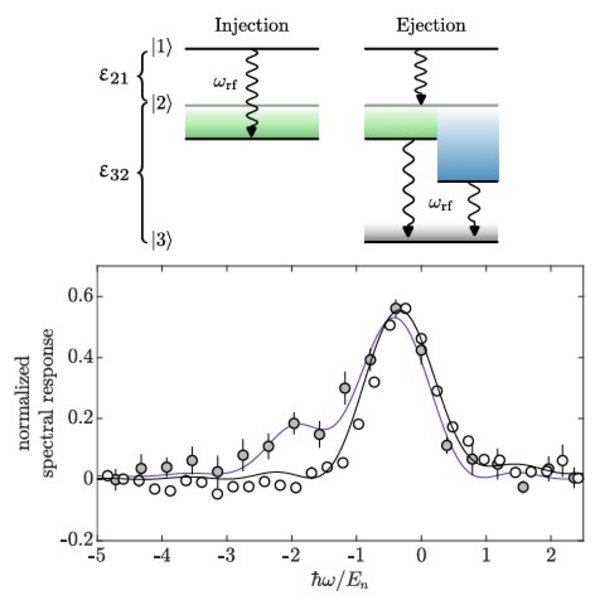
We have observed low-lying impurity states below the polaron in a Bose-Einstein condensate.
We have investigated impurities embedded in a Bose-Einstein Condensate of 39K atoms with a pump-probe ejection spectroscopy sequence. We observed a significant spectral signal at energies well below the energy of the polaron. We compared these results to two different theoretical models: a low-energy impurity state dressed by many bosonic excitations and a bipolaron state formed by two polarons due to attractive interactions mediated by the BEC. Both theories predict ejection spectra consistent with the low-energy signal, but only the bipolaron model is compatible with its spectral weight!
Our paper is on Arxiv here
(04/2026)
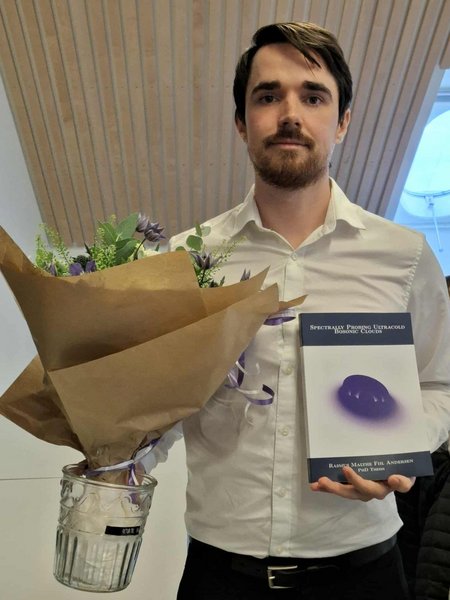
In November, Malthe successfully defended his PhD titled "Spectrally Probing Ultracold Bosonic Clouds"
The assessment committee consisted of Prof. David Clément from Institut d'Optique and Prof. Patrick Windpassinger from the University of Mainz.
Malthe will stay in the group as a postdoc to continue his scientific work!
(11/2025)
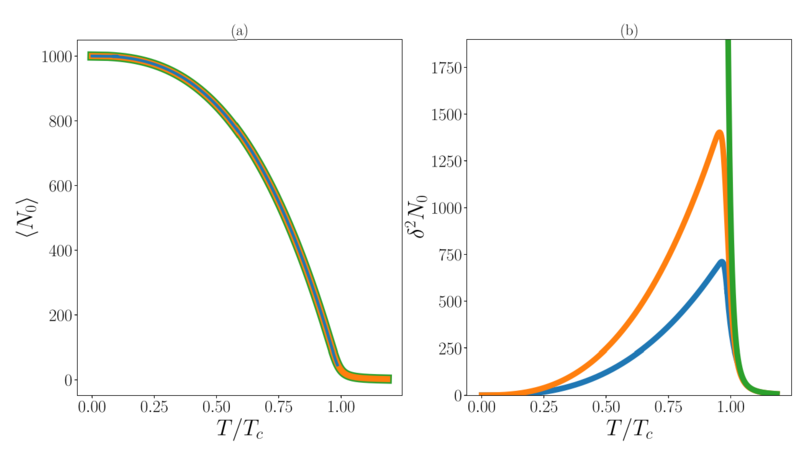
In this paper, we review the progress made over the past 30 years in studying the statistical fluctuations of Bose-Einstein condensates. While the mean number of condensed atoms is independent of the choice of statistical ensemble, the microcanonical, canonical, or grand canonical variances differ significantly among these ensembles. Focusing primarily on the ideal Bose gas, we emphasize the inequivalence of the Gibbs statistical ensembles and examine various approaches to this problem. These approaches include explicit analytic results for primarily one-dimensional systems, methods based on recurrence relations, asymptotic results for large numbers of particles, techniques derived from laser theory, and methods involving the construction of statistical ensembles via stochastic processes, such as the Metropolis algorithm. We also discuss the less thoroughly resolved problem of the statistical behavior of weakly interacting Bose gases. In particular, we elaborate on our stochastic approach, known as the hybrid sampling method. The experimental aspect of this field has gained renewed interest, especially following groundbreaking recent measurements of condensate fluctuations. These advancements were enabled by unprecedented control over the total number of atoms in each experimental realization.
The paper is also available on arxiv
(10/2025)
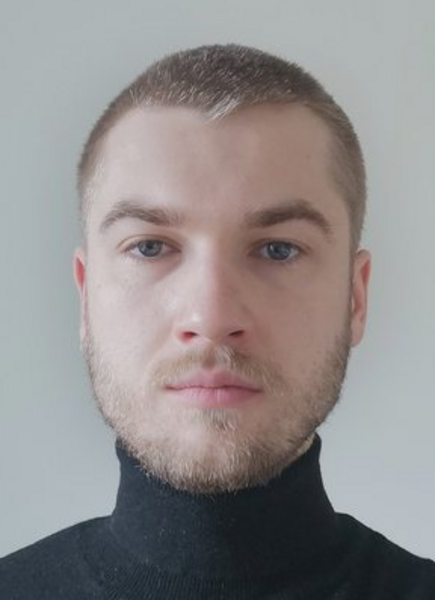
In September, Ilja successfully completed his Part-A exam of his PhD titled "Non-destructive spectroscopic characterization of Bose-Einstein condensates"
Ilja will now continue his scientific work for the final half of his PhD!
(09/2025)
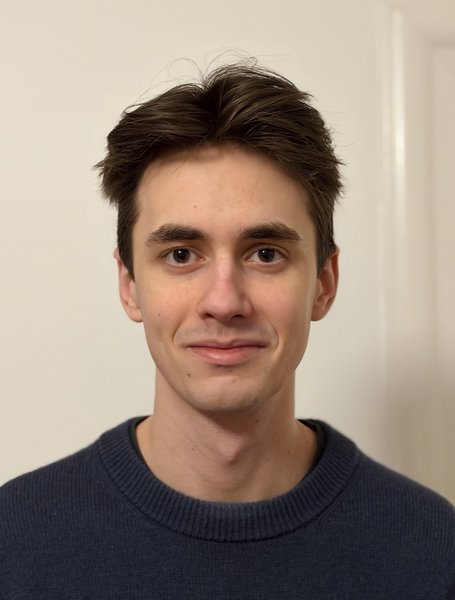
In September Nicolai joined our group as PhD student!
He has previously successfully done his Bachelor project in the group, as well as worked extensively on the student MOT project.
He will join the "Lattice" lab and work towards implementing Lithium as a secondary species besides the existing Rubidium.
CONGRATULATIONS on starting the PhD!
(09/2025)

Our work on three-body physics in the impurity limit has been published in Physical Review A
We have investigated three-body loss processes of impurity atoms embedded in a medium of a Bose-Einstein Condensate close to a Feshbach resonance. The time-dependent number of atoms in the BEC is recorded which allow for a measurement of the three-body loss rate coefficient L3 and its scaling with the impurity-medium scattering length. Moreover, the medium atom number is reconstructed from spectroscopic loss measurements. This allows for a comparison of the medium densities based on both the extracted loss rates and the spectroscopically reconstructed atom number. Finally, the number of lost medium atoms per loss event is evaluated and found to exceed 2 at strong interactions, which is attributed to secondary collisions in the medium. These investigations establish the use of a fast loss mechanism as a new tool in the field and provide quantitative measurements of three-body losses at large interaction strengths.
Our paper is also available on Arxiv here
(05/2025)
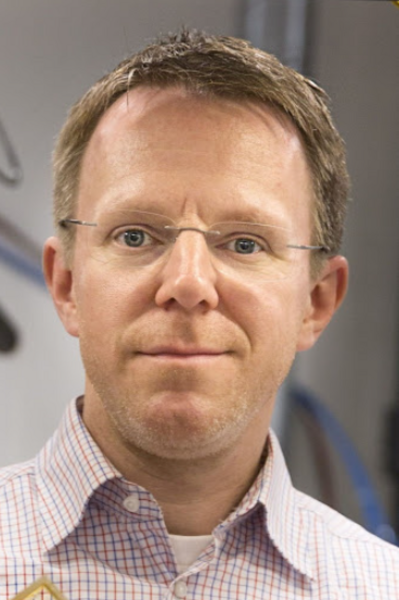
Jan has joined the editorial board of Physical Review Research!
The Editorial Board is comprised of leading experts from the global research community. Editorial Board members advise on editorial decisions, scope, and direction, and act as ambassadors in the community and arbiters of author appeals.
See the editorial staff here.
(2025)

We are part of the Center for Complex Quantum Systems (CCQ).

We are supported by the Novo Nordisk Foundation within the NERD program.
We are supported by the Independent Research Fund Denmark within the Natural Sciences subject area.

The Carlsberg foundation.