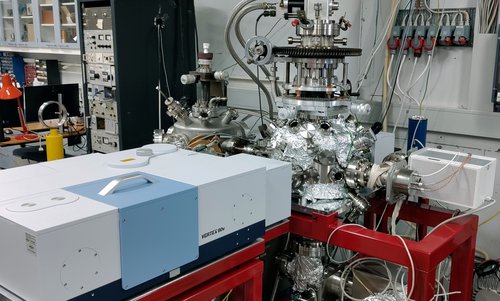
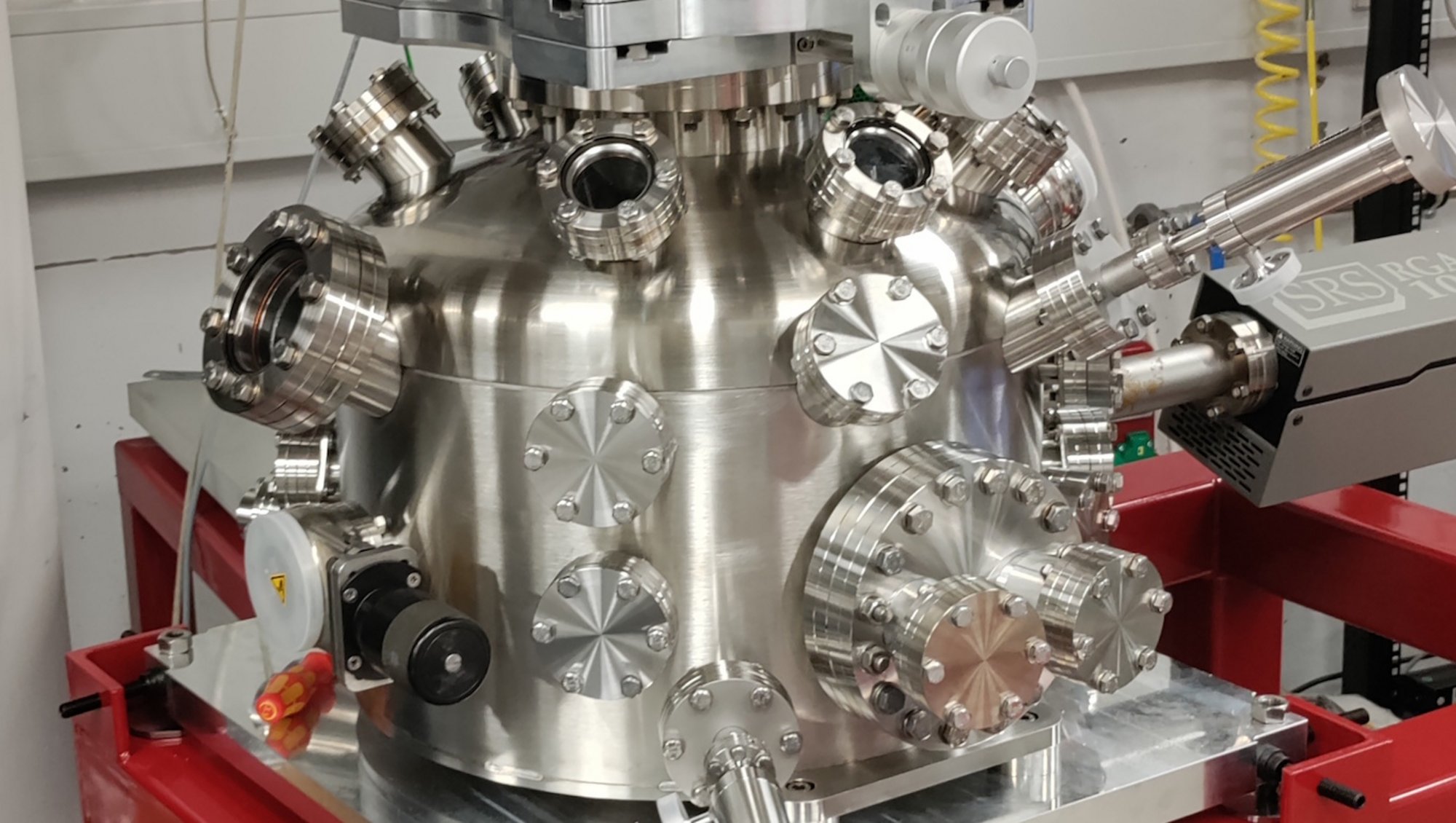
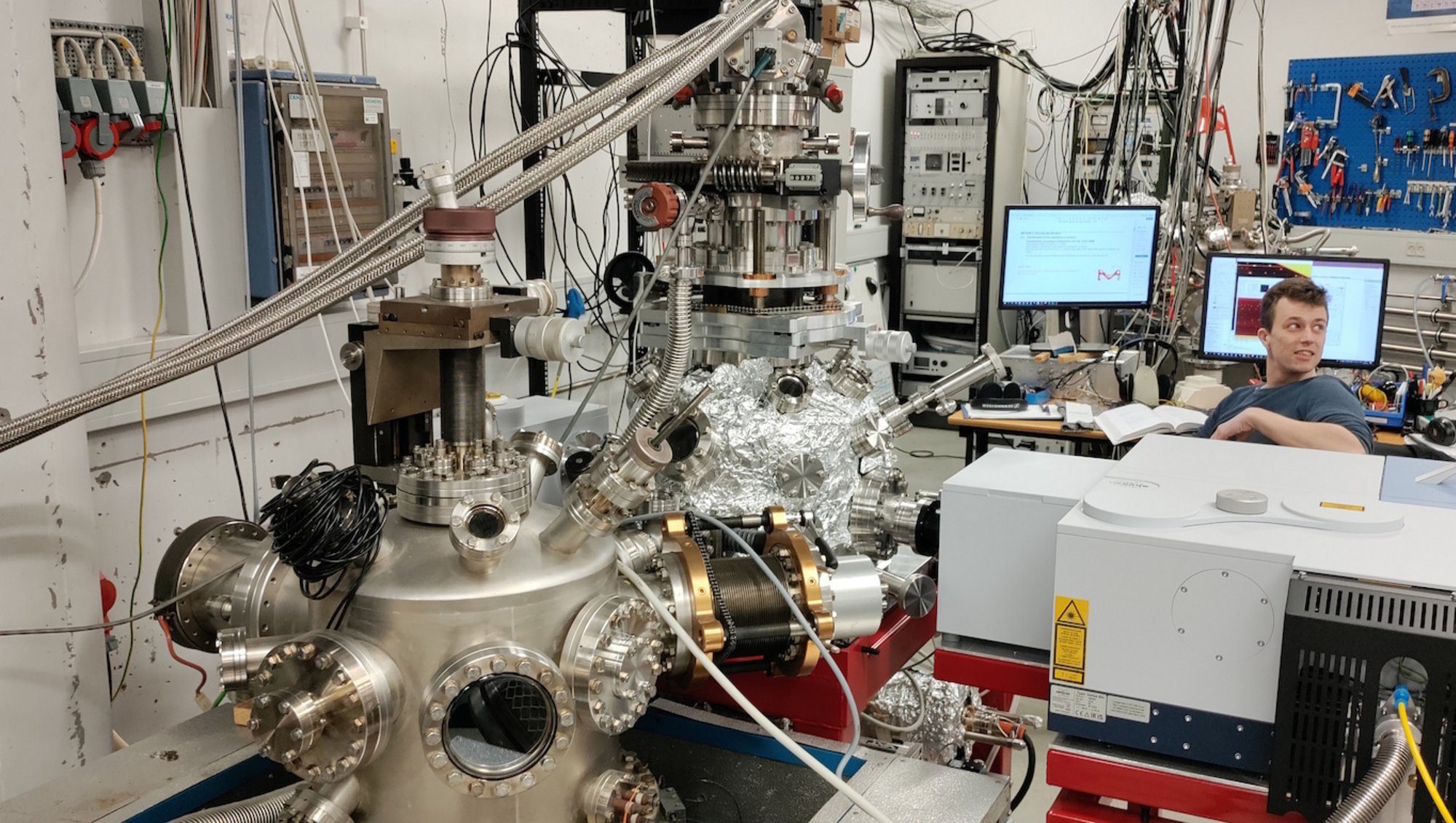
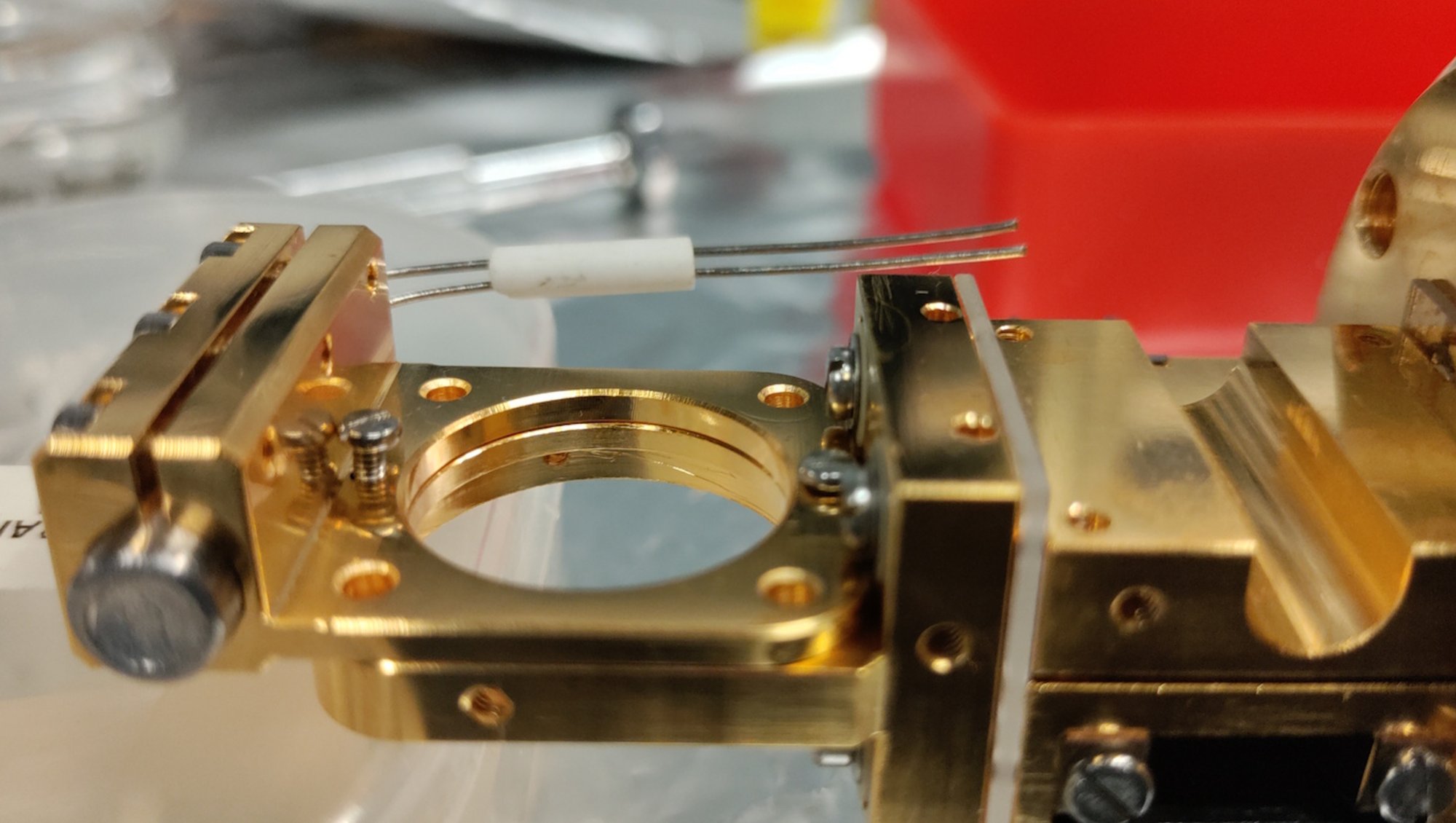
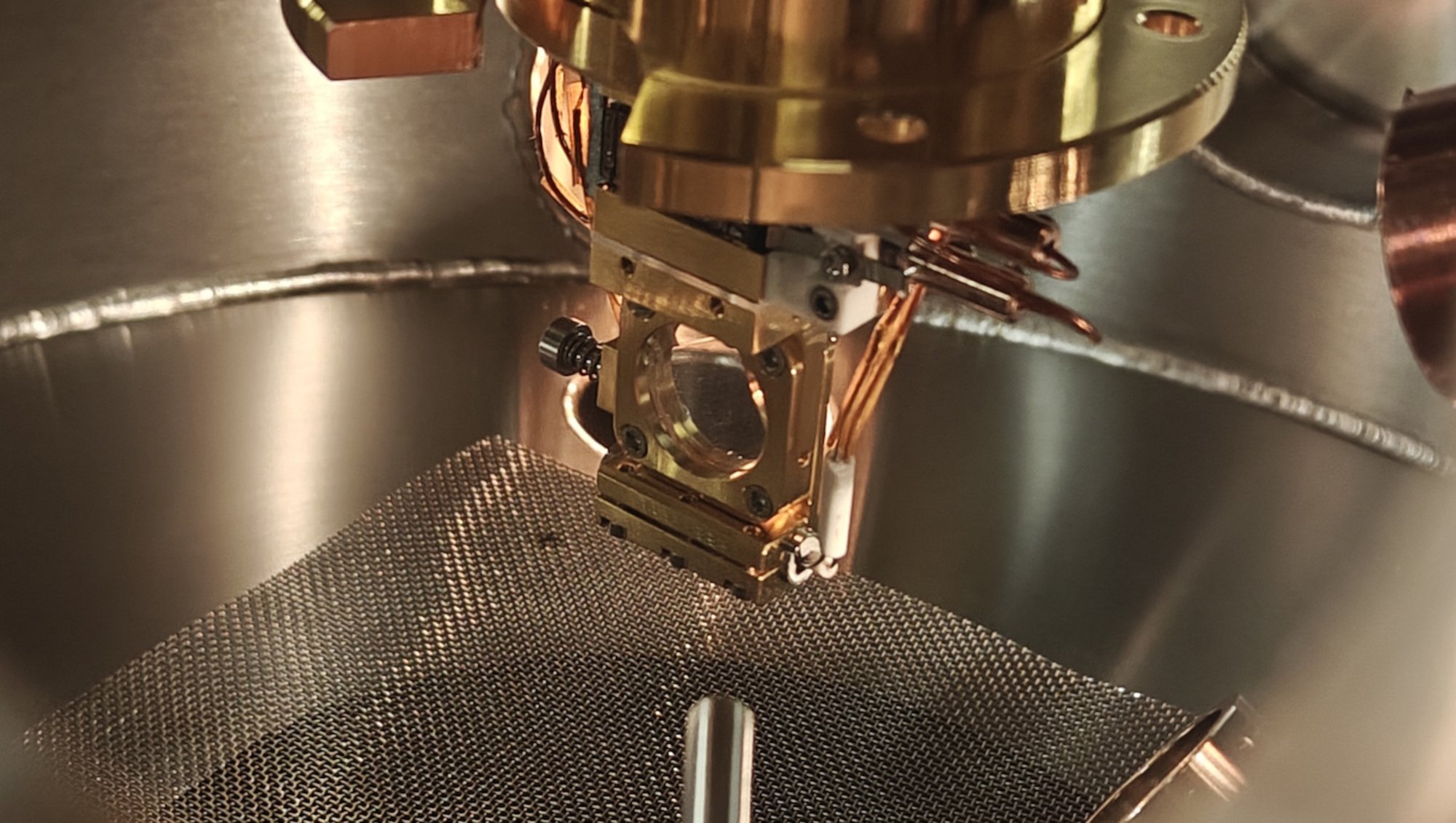
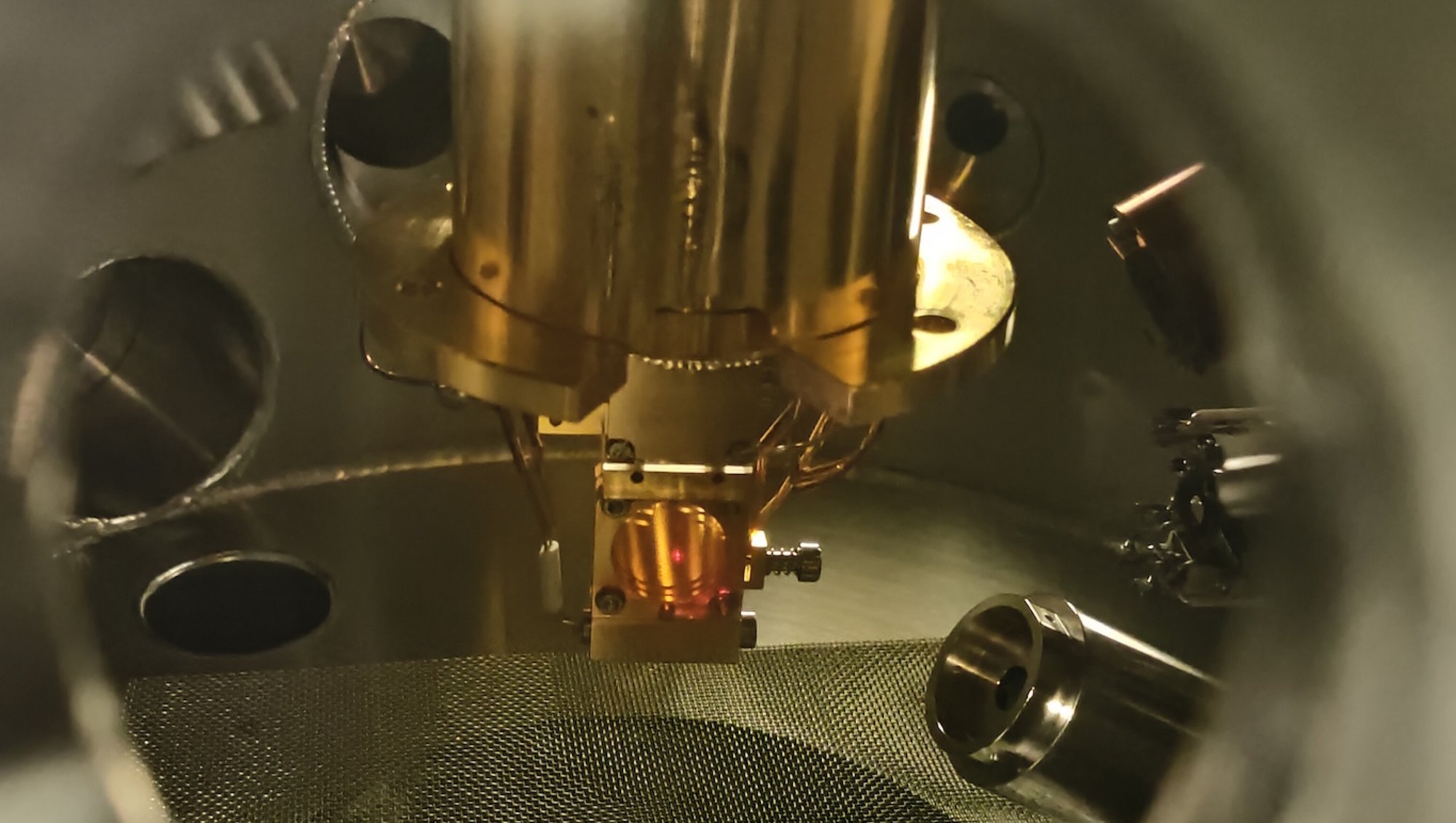
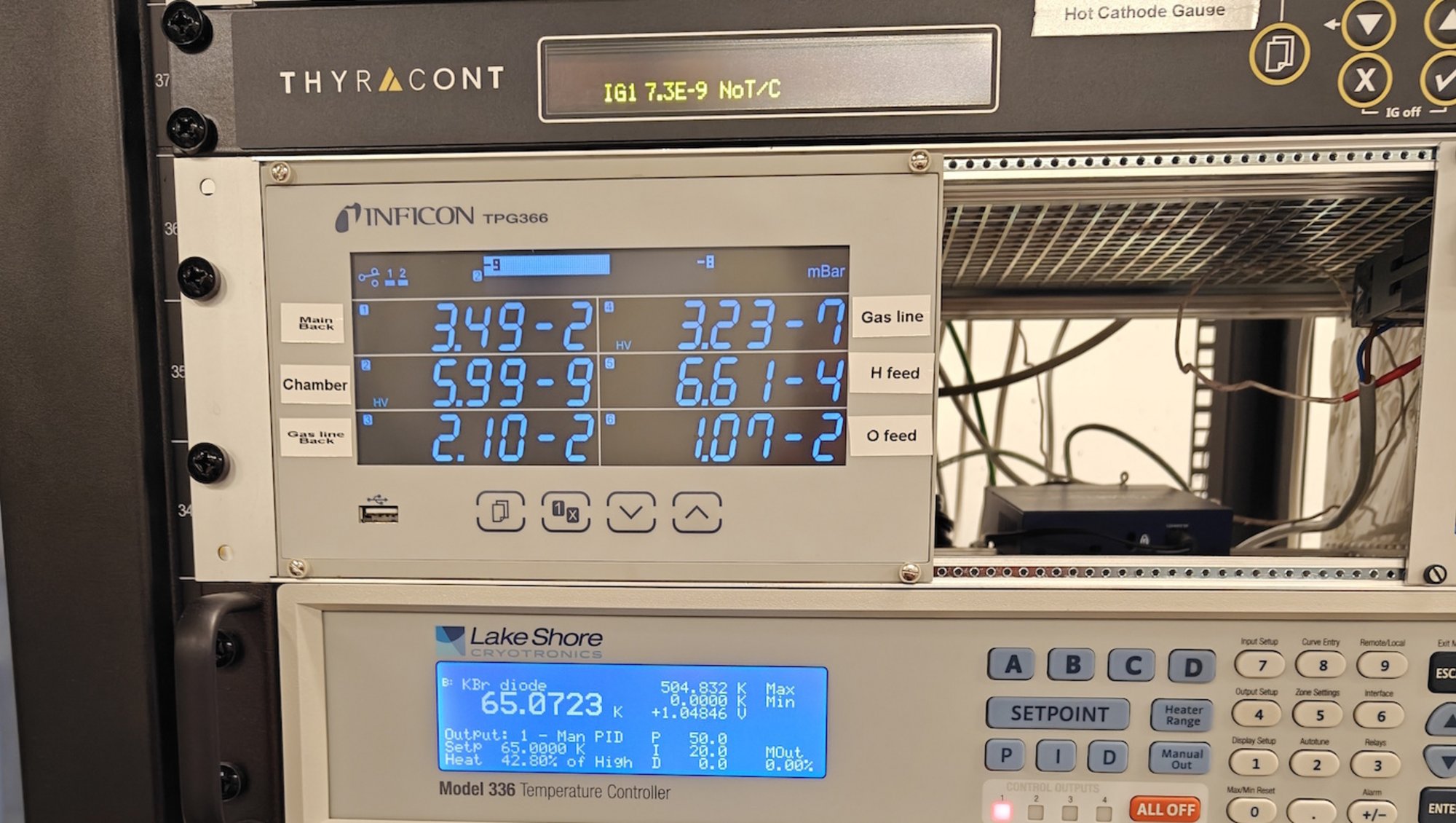
The red chamber was developed as part of InterCat in order to extend the laboratory's equipment to the low temperature region. The chamber reaches a base pressure in the low 10-10 mbar region through a combination of a turbmolecular and ion/TSP pumping. It is equipped with a closed-cycle helium cryostat to cool a three-stage sample holder to cryogenic temperature. Two of these allow transmision and reflection (RAIRS) infrared spectroscopic measurments, utilizing an IR transmitting window (e.g. KBr) and an optically polished gold plated copper plate, respectively. Both samples can be cooled to ca. 15 K and heated with a resistive cartride heater to 300 K. The third sample holder accepts sample flags compatible with the Aarhus STM and allows sample exchange without breaking vacuum, also for use in reflection IR geometry. A variety of substrates including metal single crystals and highly oriented pyrolytic graphite (HOPG). This sample can be cooled to 25 K and heated to ca. 700 using a tungsten filament mounted behind the flag. Temperature control is achieved with a cryogenic temperature controller (Lakeshore 336).
Infrared spectra are acquired using a Bruker Vertex 80v fourier transoform Infafred (FTIR) spectrometer, coupled to the chamber via evacuated optics housings and KBr windows. The IR beam can be directed through either the transmission of reflection beam paths by means of a mirror in the entrance box without opening the UHV chamber. IR light is detected with a high sensitivity mercury cadmium telluride (MCT) detection. In addition, the chamber is equipped with a quadrupole mass spectrometer (QMS) with a mass range of 1-2048 amu (Pfeiffer HiQuad QMG700) for monitoring the gas phase inside the chamber and for perofrming temperature programmed desorption (TPD) measurements.
The chamber has a variety of ports, all facing the reflection sample position, allowing, for example, atomic (O, H, N) beam deposition, molecular evaporation from Knudsen cell sources and electron gun irradiation. There is also a laser interferometry set-up for film thickness measurements optimized for the transmission IR geometry. The chamber is connected to the blue chamber via a load lock allow sample insertion and transfer between the two chambers using a transfer arm.