
New SOXS Instrument Begins Science Operations at ESO’s La Silla Observatory

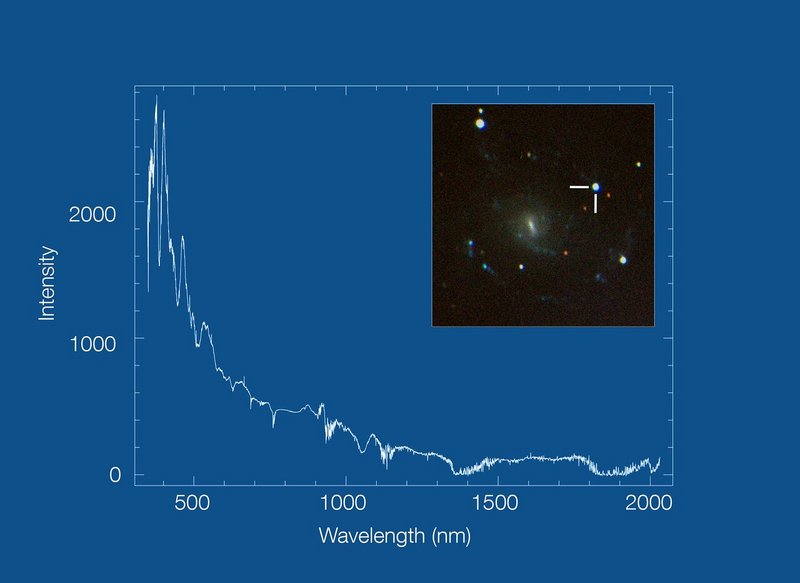
The European Southern Observatory’s new Son Of X-Shooter (SOXS) spectrograph has achieved first light on the 3.58-m New Technology Telescope (NTT) at La Silla Observatory in Chile’s Atacama Desert. Designed to capture optical and near-infrared light simultaneously, SOXS can be deployed within minutes to observe short-lived cosmic events such as supernovae, tidal disruption events caused by stars torn apart by supermassive black holes, gamma-ray bursts, and neutron star mergers. This broadband capability makes SOXS uniquely equipped to reveal the physical nature of transient objects as soon as they appear.
SOXS fills a long-standing gap in astronomy by providing dedicated, continuous spectroscopic follow-up of rapidly evolving cosmic explosions. Many transients evolve quickly, making swift observations essential to capture ephemeral signatures that preserve the imprints of their progenitor stars. Until now, astronomers have often lacked access to uninterrupted observations needed for such studies. SOXS is designed to meet this challenge by immediately locking onto newly discovered transients and monitoring their evolution over time.
“SOXS represents a tremendous step forward for time-domain astronomy,” says Maximilian Stritzinger, scientific board member of the SOXS instrument and faculty member at Aarhus University. “Its ability to respond quickly and track these events as they unfold will enable us to recover details that would otherwise fade before larger observatories can react. For our transient research program at Aarhus, our guaranteed access to SOXS observing time substantially strengthens our capacity to lead high-impact follow-up campaigns.”
By replacing earlier NTT instruments with a more powerful, purpose-built system, SOXS significantly elevates the scientific readiness for these ambitious programs. As gravitational-wave detectors continue to identify candidate neutron-star mergers, SOXS is poised to become a premier facility for electromagnetic follow-up worldwide. Rapid spectroscopy is essential for interpreting the accompanying kilonova emission, from heavy-element nucleosynthesis to ejecta dynamics. With Aarhus University actively contributing to the development and scientific vision of SOXS, its transient research group is well positioned to play a leading role in uncovering the physics of the most dynamic and energetic events in the universe.
More Information
The SOXS consortium consists of:
- Italy: INAF (Osservatorio astronomico di Brera, Osservatorio astronomico di Capodimonte, Osservatorio astronomico di Padova, Osservatorio astronomico di Catania, Osservatorio astronomico di Roma and Fundación Galileo Galilei) — consortium lead
- Chile: Millennium Institute of Astrophysics and Universidad de Tarapacá
- Denmark: Aarhus University & The Niels Bohr Institute and
- Finland: University of Turku and FINCA
- Israel: The Weizmann Institute and Tel Aviv University
- UK: Queen’s University Belfast and University of Oxford
Links
- More general information about SOXS
- More technical information about SOXS
- Images related to the New Technology Telescope
Contacts
Maximilian Stritzinger
Aarhus University
Email: max@phys.au.dk