In the following lectures, we will not follow the book chapter, but combine material from different chapters. We will begin with simple detectors to measure light or higher energy radiation. They are one channel devices, which measure only one number at a time. They do not provide any spatial information and you may call them position insensitive detectors.
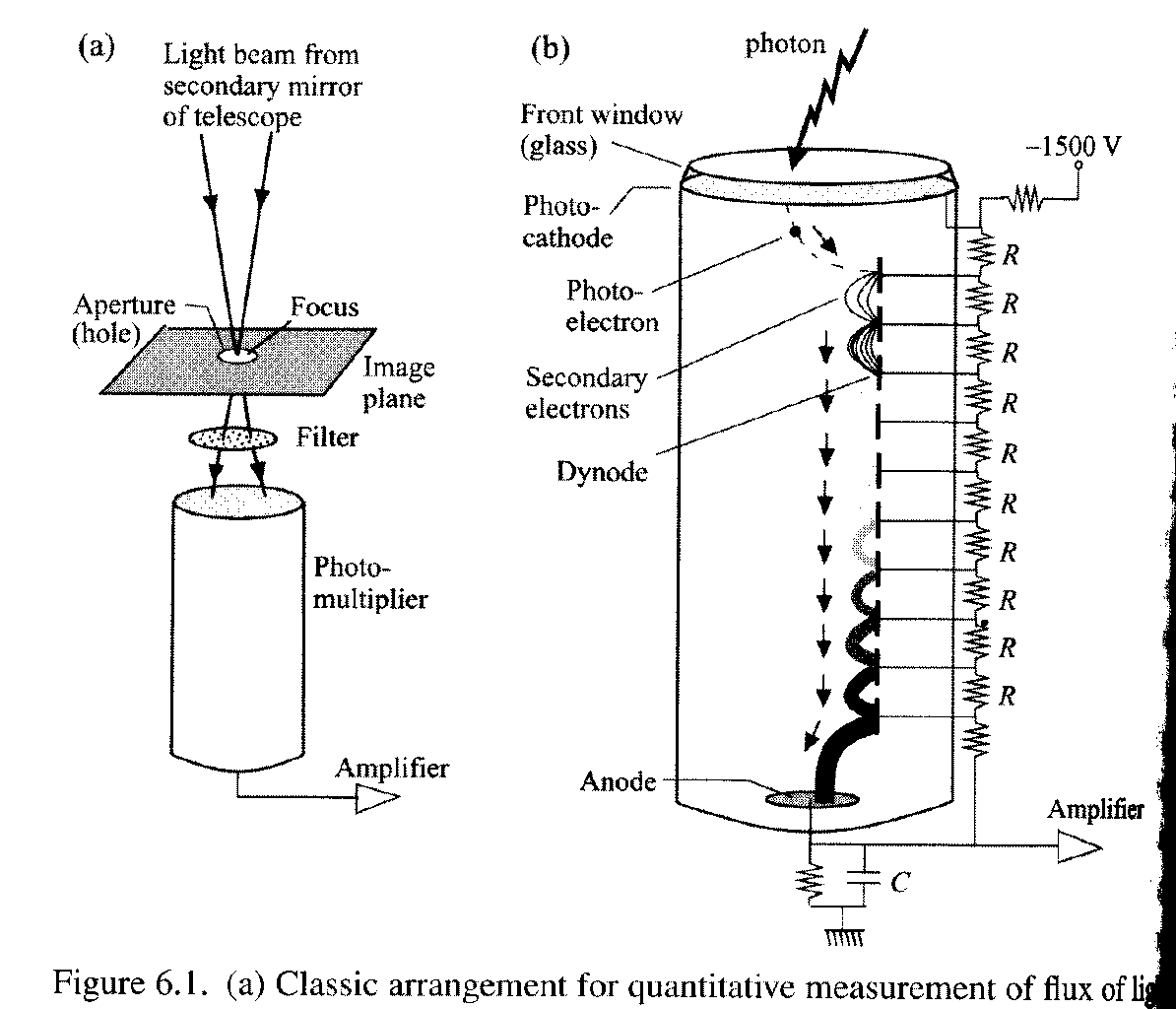
The first photometers were constructed using photomultipliers. The modern version is a photon counting device, which registers the total number of photons per integration time. The principles are illustrated in the figure. Note the presence of an aperture, which defines the area of the sky that we receive light from. This aperture means that we receive light from the target, but also a normally small amount of light from the sky.
A photometer defines a passband by choosing a filter. Commonly, a series of filters are mounted in a wheel, which can be controlled from a computer. Many systems of filter sets have been defined. The qualities of a filter set depends on its ability to describe parameters of stars and the possibility to calibrate measurements, something I will take up later. The most widespread system is the Johnson UBV systems, which has later been expanded with redder filters R, I, J , H and K. The transmission curves of the UBV filters are shown here
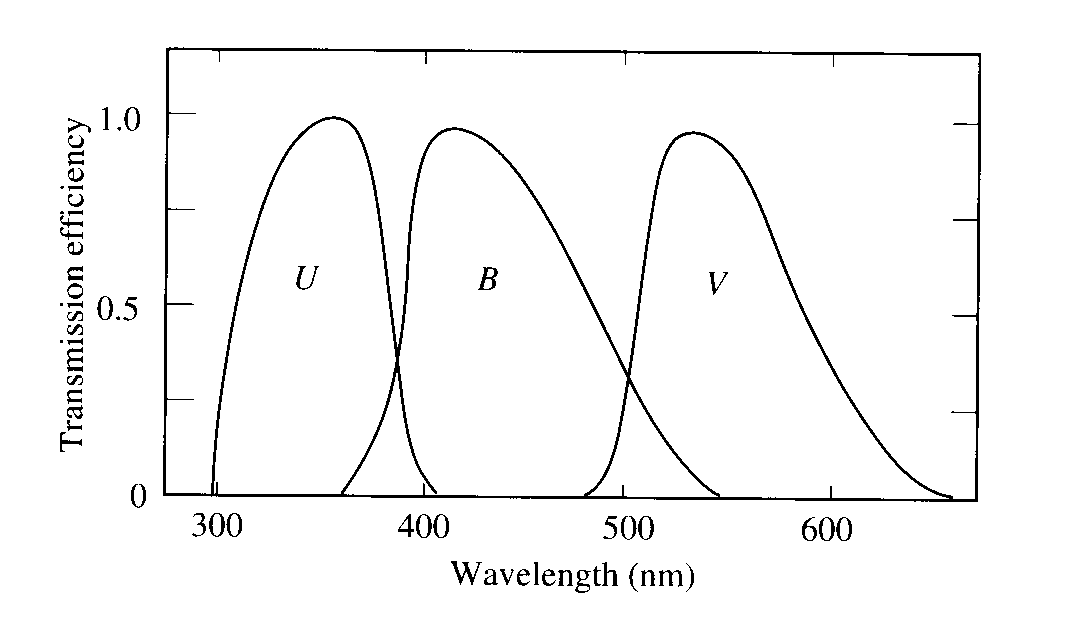
The U filter poses some difficulties. Often the absorption in the UV is large and variable and makes the measurements of the ultraviolet flux difficult. The UBVsystem is a socalled broadband system, at the filtere are appr. 100nm wide. A better system using 10nm wide filters is the Strömgren system also called the uvby system.
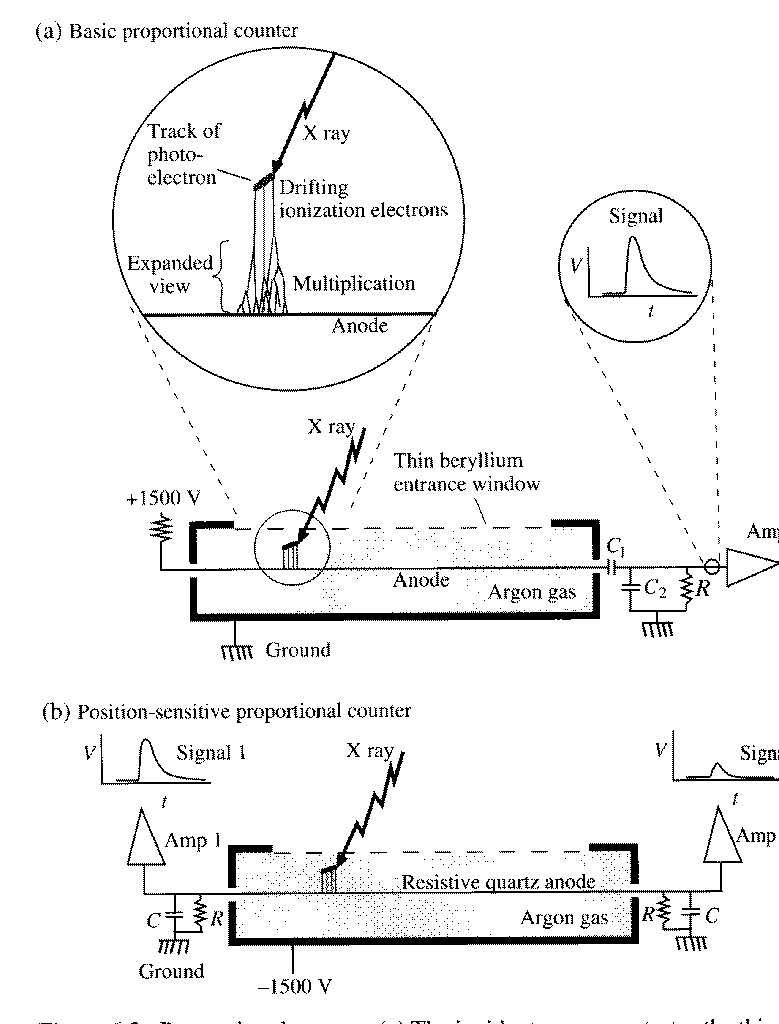
The detection of X-rays is done with different detectors. An X-ray is absorbed by an inert gas and a photoelectron ejected. This electron appears with a energy and is able to ionize the gas creating a cloud of ions and electrons. The potential moves the electrons to a wire (the anode) and multiplies the number of electrons due to collisions in the gas. A charge of thousands of electrons can then be recorded by the electronic circuit connected to the wire. If you attach two circuits and some high time resolution triggers the position of the electron cloud can be determined. This shown in the second figure.
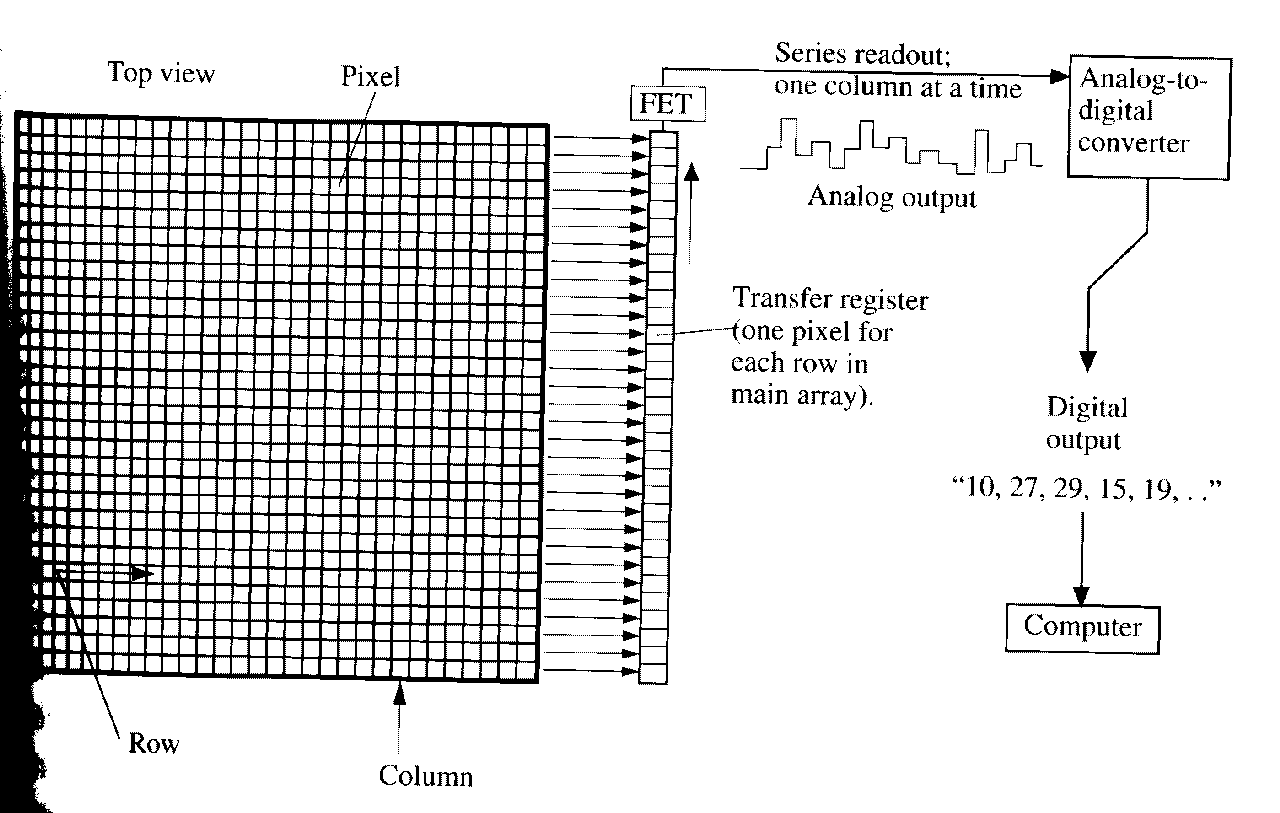
The most popular detector in optical and X-ray astronomy is beyond doubt the CCD (Charge Coupled Detector). The principle is described in two figures.
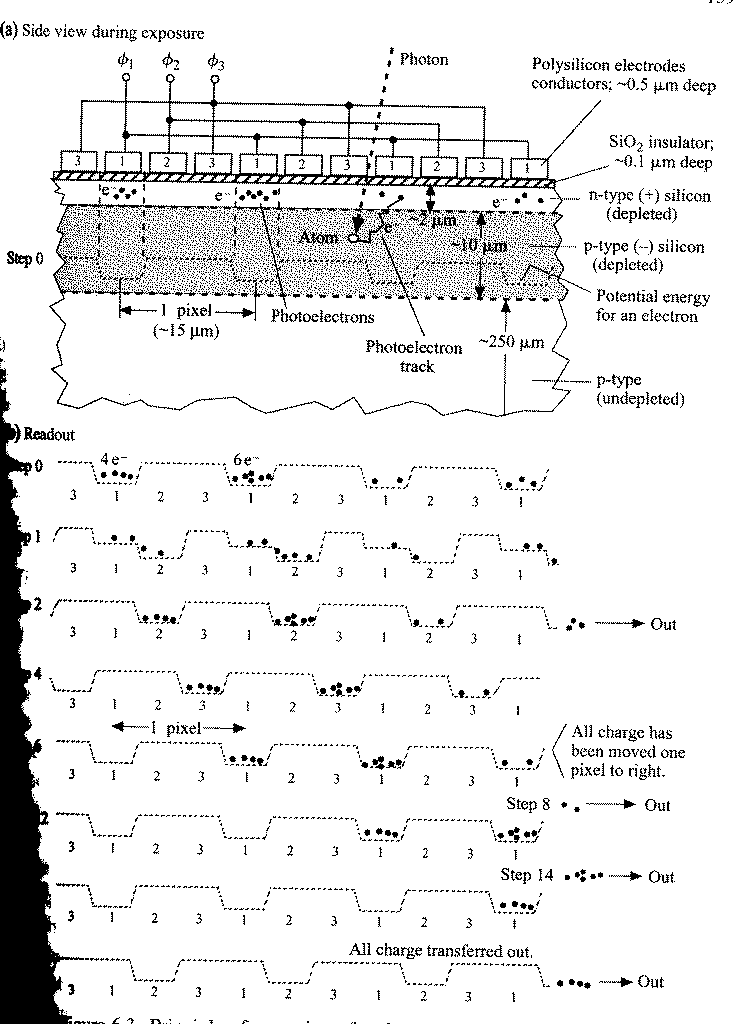
Electron are created by photons in a narrow region below the surface of the detector and then moves to the nearest potential well created by a set of electrodes on the surface of the silicon wafer. After exposure the charge is read out by changing the voltages on the different electrodes as shown on the figure. A signal appears at the output proportional to the charge. This is amplified and then digitized and the number stored in the memory/disk of a computer.
An example of a CCD image is an exposre obtained at the 80cm telescope of the glaxy M51. The colours are false and are only used to make some features more visible. Several stars are present in the field, which might serve as PSF templates. To the right you see the bias strip (or overscan region). The image has not been calibrated (bias-subtracted, flat-fielded). A bad column is also present and a few areas, with non-active pixels.
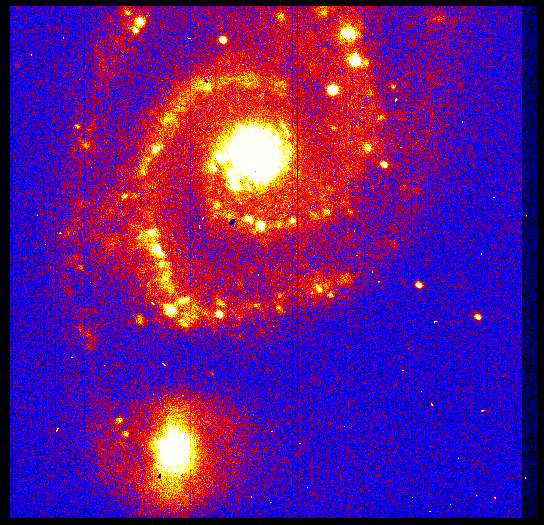
M51 observed with the IAC 80 telescope at Tenerife